Work
Work
The Director's Cut
The Director's Cut
The Director's Cut
On building for the work, not the moment
On building for the work, not the moment
The conversation almost always moves in one direction: toward more. More differentiation, more personality, more proof that something happened. It's understandable. Clients are paying for decisions they can see, and restraint is genuinely difficult to justify when the alternative is visible effort.
But there's a different logic, and it belongs to editors and directors more than to designers.
Walter Murch spent three years editing Apocalypse Now. The footage Francis Ford Coppola shot in the Philippines was vast, unstable, and accumulated under conditions that nearly destroyed the production. What Murch inherited wasn't a film so much as several competing films inside the same reels. His job was not to assemble them but to find the single story already present in the material and remove everything that worked against it. He later wrote that the best cut is the one the audience doesn't notice, not because it was invisible, but because it felt inevitable. Every frame that remained had earned its place. Nothing survived by default.
That principle is older than film. Michelangelo is said to have described his David as the result of simply removing everything that wasn't David. The story is probably apocryphal, but it has survived five centuries because it describes something accurate about how lasting work gets made: not by accumulation, but by elimination.
The identities that age well follow the same pattern. They are almost never the ones that tried hardest at the moment they were made. They are the ones that made fewer concessions to that moment, fewer nods to what was current, fewer decisions made to impress in the room rather than to hold over time. At some point someone chose to stop adding, and that choice is usually what you're looking at when you look at them now.
Two Twenty is a video production company founded by Jordan McQueen. From the first conversation, McQueen was clear about what he wanted and what he didn't: quality over volume, nothing that didn't earn its place. That wasn't a position we arrived at together through the process. It was already his operating logic before we started, which made the work easier to protect.
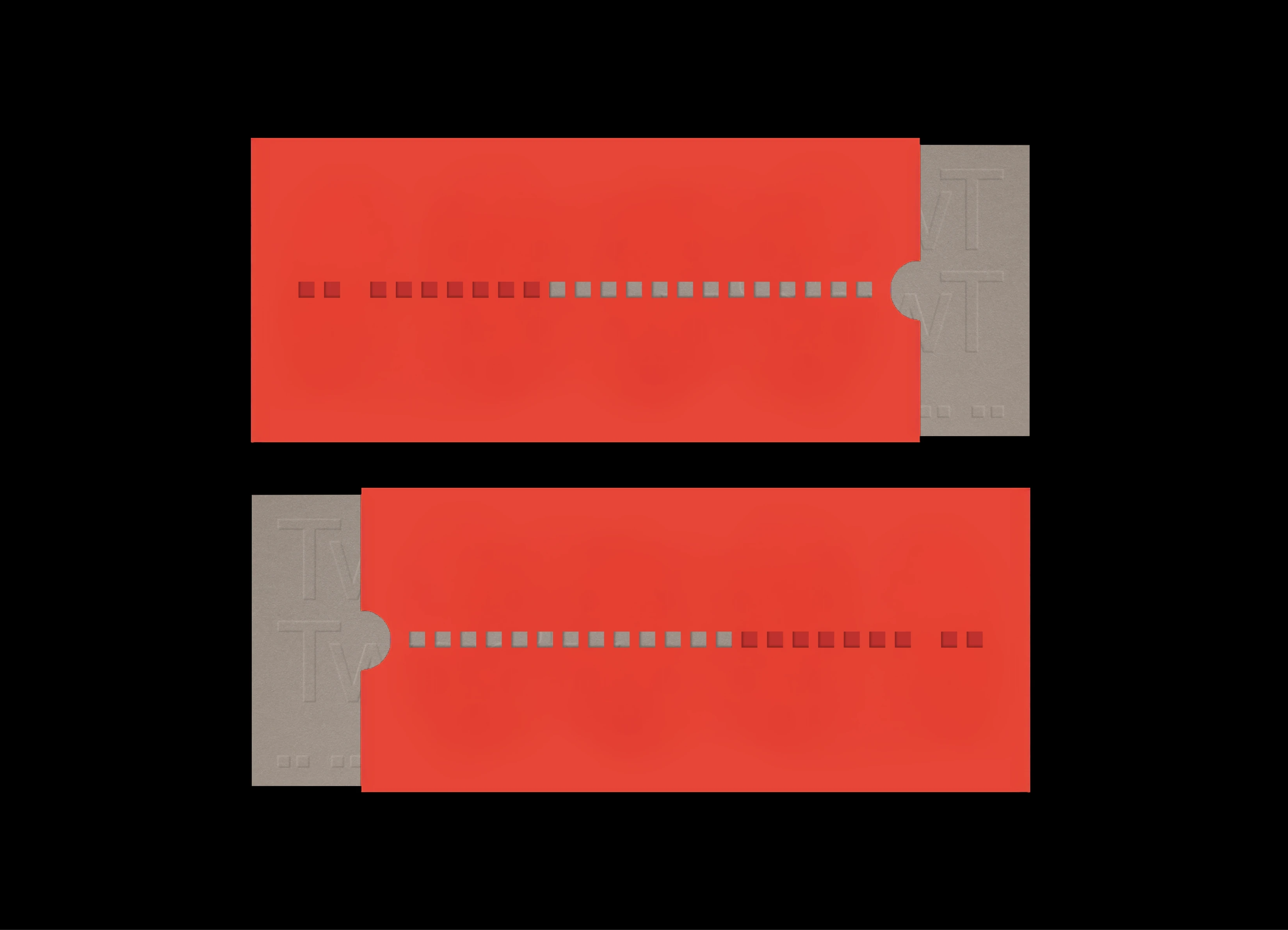
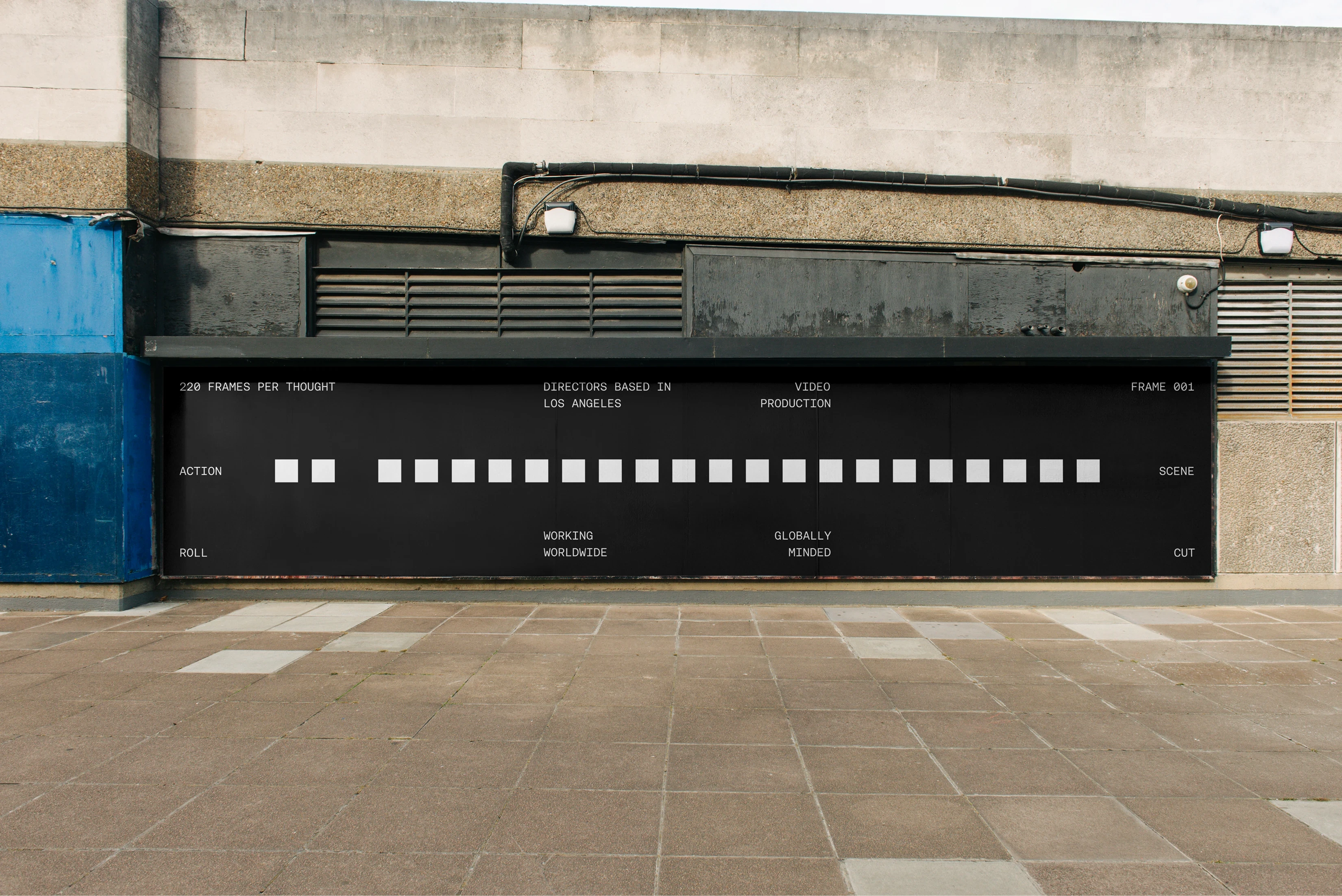
The identity we developed holds that position without announcing it. It doesn't perform. It's designed to disappear into the work it frames, because that's where the attention belongs.
The conversation almost always moves in one direction: toward more. More differentiation, more personality, more proof that something happened. It's understandable. Clients are paying for decisions they can see, and restraint is genuinely difficult to justify when the alternative is visible effort.
But there's a different logic, and it belongs to editors and directors more than to designers.
Walter Murch spent three years editing Apocalypse Now. The footage Francis Ford Coppola shot in the Philippines was vast, unstable, and accumulated under conditions that nearly destroyed the production. What Murch inherited wasn't a film so much as several competing films inside the same reels. His job was not to assemble them but to find the single story already present in the material and remove everything that worked against it. He later wrote that the best cut is the one the audience doesn't notice, not because it was invisible, but because it felt inevitable. Every frame that remained had earned its place. Nothing survived by default.
That principle is older than film. Michelangelo is said to have described his David as the result of simply removing everything that wasn't David. The story is probably apocryphal, but it has survived five centuries because it describes something accurate about how lasting work gets made: not by accumulation, but by elimination.
The identities that age well follow the same pattern. They are almost never the ones that tried hardest at the moment they were made. They are the ones that made fewer concessions to that moment, fewer nods to what was current, fewer decisions made to impress in the room rather than to hold over time. At some point someone chose to stop adding, and that choice is usually what you're looking at when you look at them now.
Two Twenty is a video production company founded by Jordan McQueen. From the first conversation, McQueen was clear about what he wanted and what he didn't: quality over volume, nothing that didn't earn its place. That wasn't a position we arrived at together through the process. It was already his operating logic before we started, which made the work easier to protect.
The identity we developed holds that position without announcing it. It doesn't perform. It's designed to disappear into the work it frames, because that's where the attention belongs.
The conversation almost always moves in one direction: toward more. More differentiation, more personality, more proof that something happened. It's understandable. Clients are paying for decisions they can see, and restraint is genuinely difficult to justify when the alternative is visible effort.
But there's a different logic, and it belongs to editors and directors more than to designers.
Walter Murch spent three years editing Apocalypse Now. The footage Francis Ford Coppola shot in the Philippines was vast, unstable, and accumulated under conditions that nearly destroyed the production. What Murch inherited wasn't a film so much as several competing films inside the same reels. His job was not to assemble them but to find the single story already present in the material and remove everything that worked against it. He later wrote that the best cut is the one the audience doesn't notice, not because it was invisible, but because it felt inevitable. Every frame that remained had earned its place. Nothing survived by default.
That principle is older than film. Michelangelo is said to have described his David as the result of simply removing everything that wasn't David. The story is probably apocryphal, but it has survived five centuries because it describes something accurate about how lasting work gets made: not by accumulation, but by elimination.
The identities that age well follow the same pattern. They are almost never the ones that tried hardest at the moment they were made. They are the ones that made fewer concessions to that moment, fewer nods to what was current, fewer decisions made to impress in the room rather than to hold over time. At some point someone chose to stop adding, and that choice is usually what you're looking at when you look at them now.
Two Twenty is a video production company founded by Jordan McQueen. From the first conversation, McQueen was clear about what he wanted and what he didn't: quality over volume, nothing that didn't earn its place. That wasn't a position we arrived at together through the process. It was already his operating logic before we started, which made the work easier to protect.
The identity we developed holds that position without announcing it. It doesn't perform. It's designed to disappear into the work it frames, because that's where the attention belongs.


" height="420.7060844560808px" id="vAF1GXtUa" width="1614.4210925226776px"/></svg>)